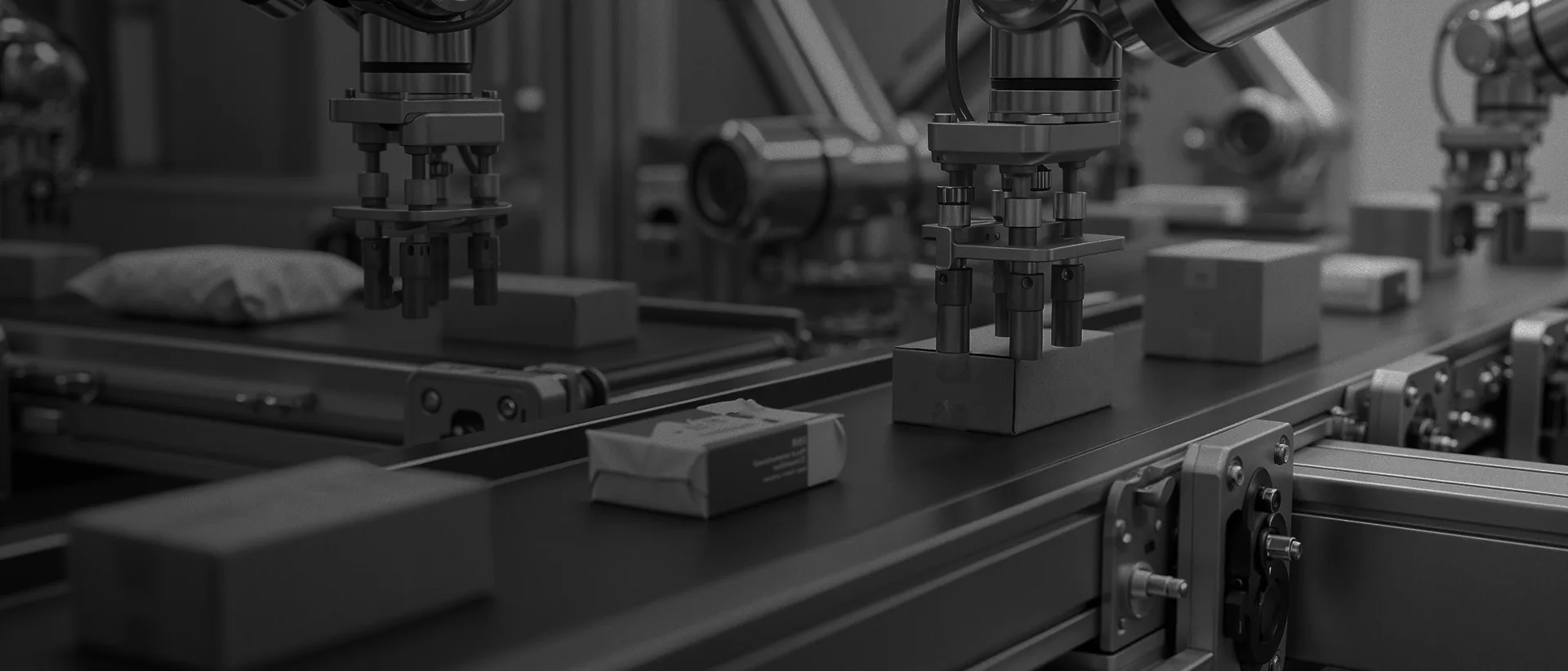
AI robotics that replaces the delicate, precise handwork of people
Robot control and operating environments from different manufacturers, integrated seamlessly. Reduce maintenance overhead and manage everything from vision to control and operation in a single AI-driven workflow.
Irregular targets, different robots, frequent environment changes... Hesitating about automation?
Products, stacking patterns, equipment configurations, and work sequences keep changing — and existing automation runs into new challenges.
- Pain 1
Difficult learning and recognition of irregular targets
Rule-based systems struggle to reliably recognize objects with irregular shapes such as boxes, ropes, and plastic films.
- Pain 2
Control complexity across different robot manufacturers
Different interfaces and drive methods per manufacturer multiply the difficulty of on-floor adoption and operation.
- Pain 3
Reconfiguration burden from changing work conditions
Every time work conditions or stacking patterns change, repetitive teaching and reprogramming have to be redone.
- Pain 4
Fragmented systems and expansion difficulty
Each new piece of equipment requires its own integration work, making system maintenance and expansion difficult.
From AI vision to natural-language control interfaces and integrated robot connectivity unbound by manufacturer.
Multi-dimensional vision recognition and real-time object understanding — plus natural-language-model-based use without the burden of complex coding (Teaching) — are paired with a single operating environment independent of robot manufacturer, making robot solution adoption simple.
- 1
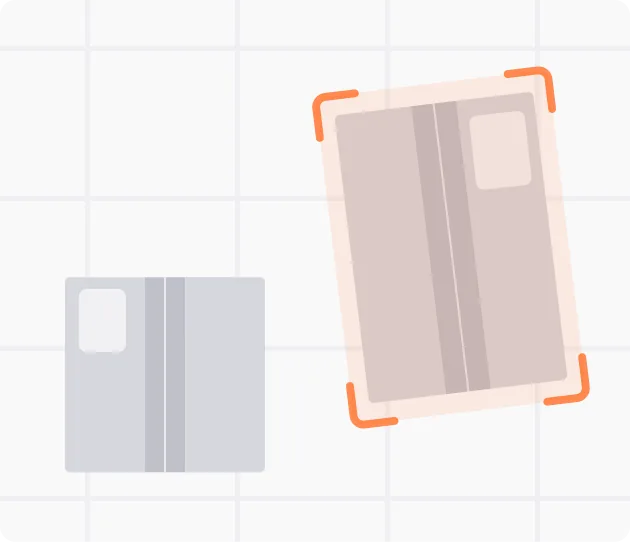
AI vision-based position recognition of irregular targets
From scattered boxes to crumpled film and tangled ropes — position, orientation, and condition are captured in real time, so robots work accurately without manual alignment.
- 2
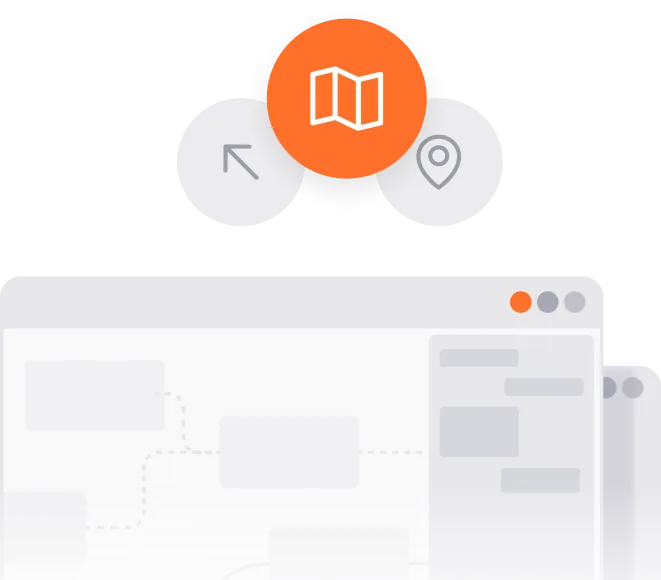
No-code interface based on natural language
Complex code and teaching are reduced; work is carried out with natural-language and visual interfaces, so floor operators can quickly modify and run automation workflows.
- 3
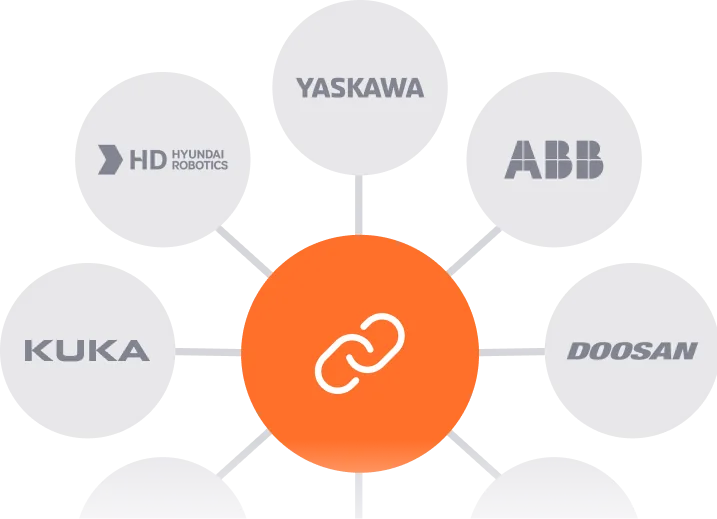
Connect every robot brand without constraint
Robots from different brands can be controlled in a single environment. Whether you add a new robot or replace existing equipment, operations stay consistent on the same platform.
AI robotics lineup applied across various processes
Across automotive, battery, precision components, bio, and other industries, AIVEX configures product-specific AI inspection solutions by inspection target, and applies surface, dimension, position, and defect inspections to fit your floor conditions.
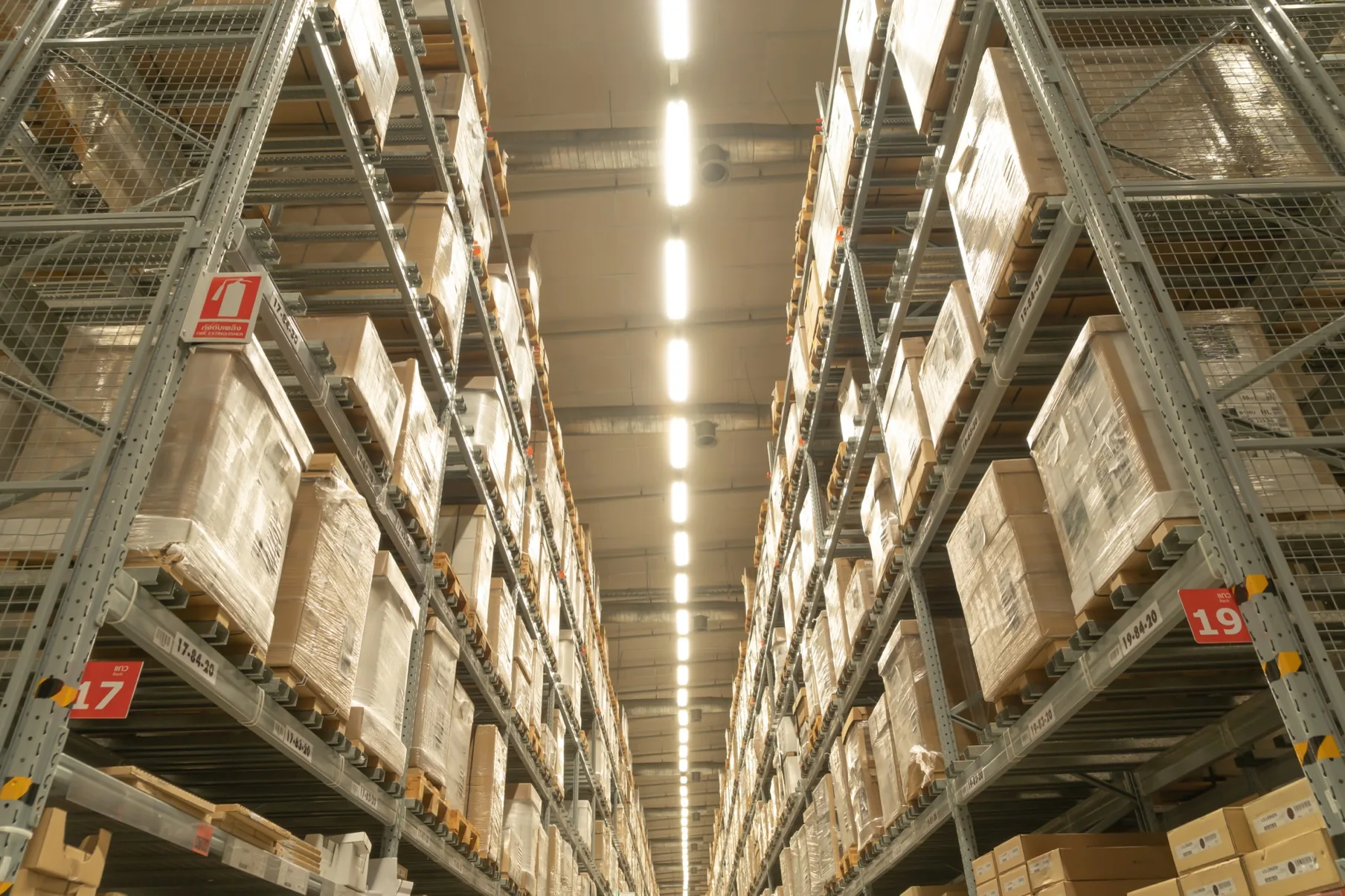
Palletizing · Depalletizing

A PoC process that judges by mass-production uptime, not by one-off tests
Beyond on-screen vision recognition results, actual robot success rate and exception auto-recovery rate are measured separately to validate adoption viability.
*Standard PoC duration and scope are finalized through an agreement step after on-site data diagnostics.
- 1
Process diagnosis
Inspection target, available data, and line environment are reviewed to determine the applicable system.
- 2
Single-line PoC
Validated against automation criteria on a representative product and a single line.
- 3
Pilot operation
Models are trained and deployed to the designated line, and operational fitness is verified in the actual inspection flow.
- 4
Multi-line expansion
Validated criteria are extended to multiple lines and items, and operations are standardized.
Please prepare these for the PoC!
- Representative sampleSample of the product to be automated
- Object informationWeight, size, shape, material, and handling precautions
- Process requirementsCycle time, throughput, required tolerances, and automation equipment installation layout
- Deployment environmentDeployment environment requirements per security policy (on-premise, air-gapped network, etc.)
Field application cases
AIVEX has built inspection automation and quality improvement cases across automotive, battery, precision components, logistics, and other manufacturing fields. See the results based on actual process conditions and operating data.
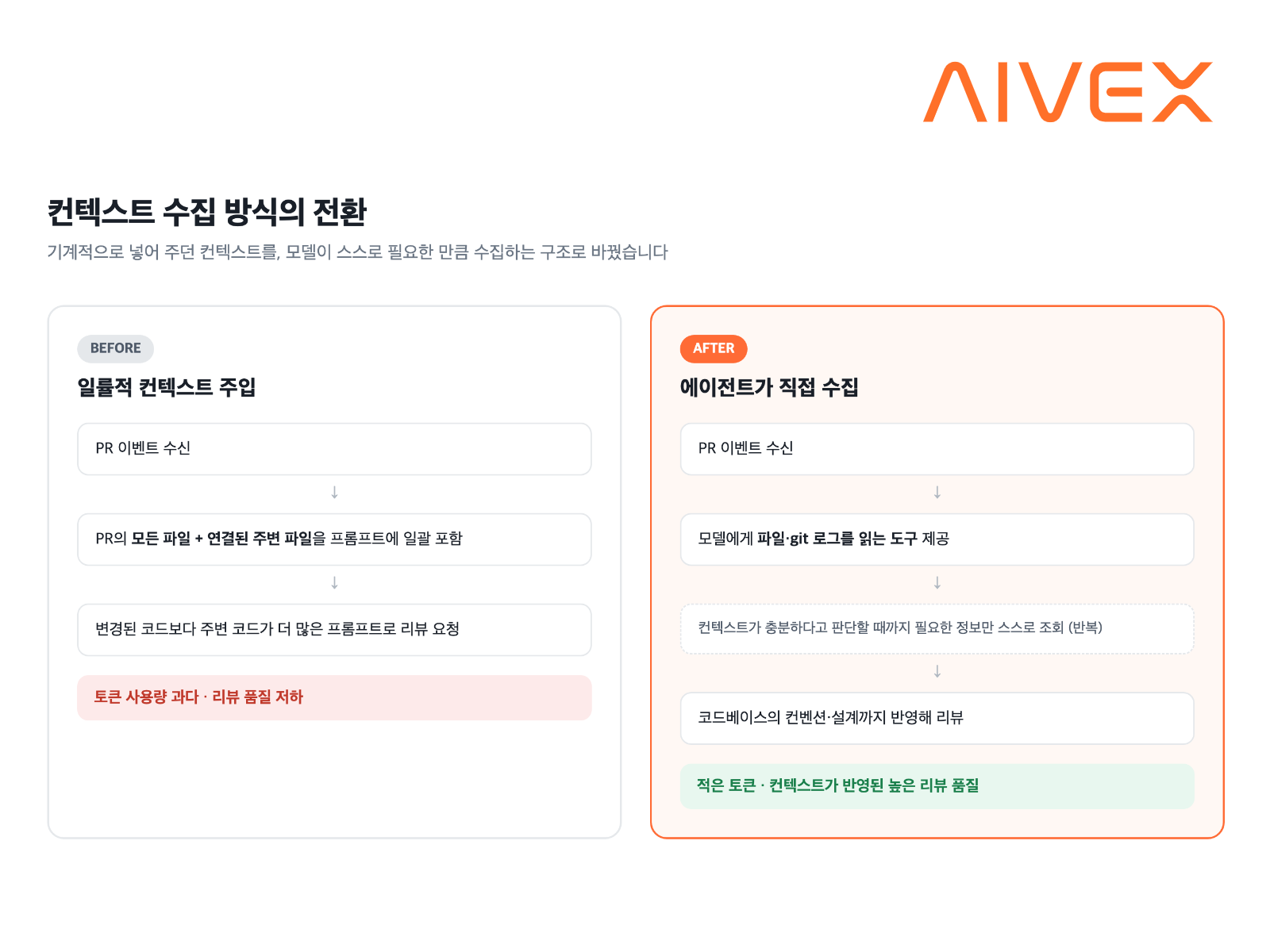
Building Prism: Our In-House AI Code Review System
Our AI Platform Team currently uses “Prism,” an in-house code review system developed to ensure the stable operation of the AIVOps platform and maintain the quality of its codebase. In this article, we will share why we decided to build Prism, how the system was developed, and how we are using it today.
2026.09.10
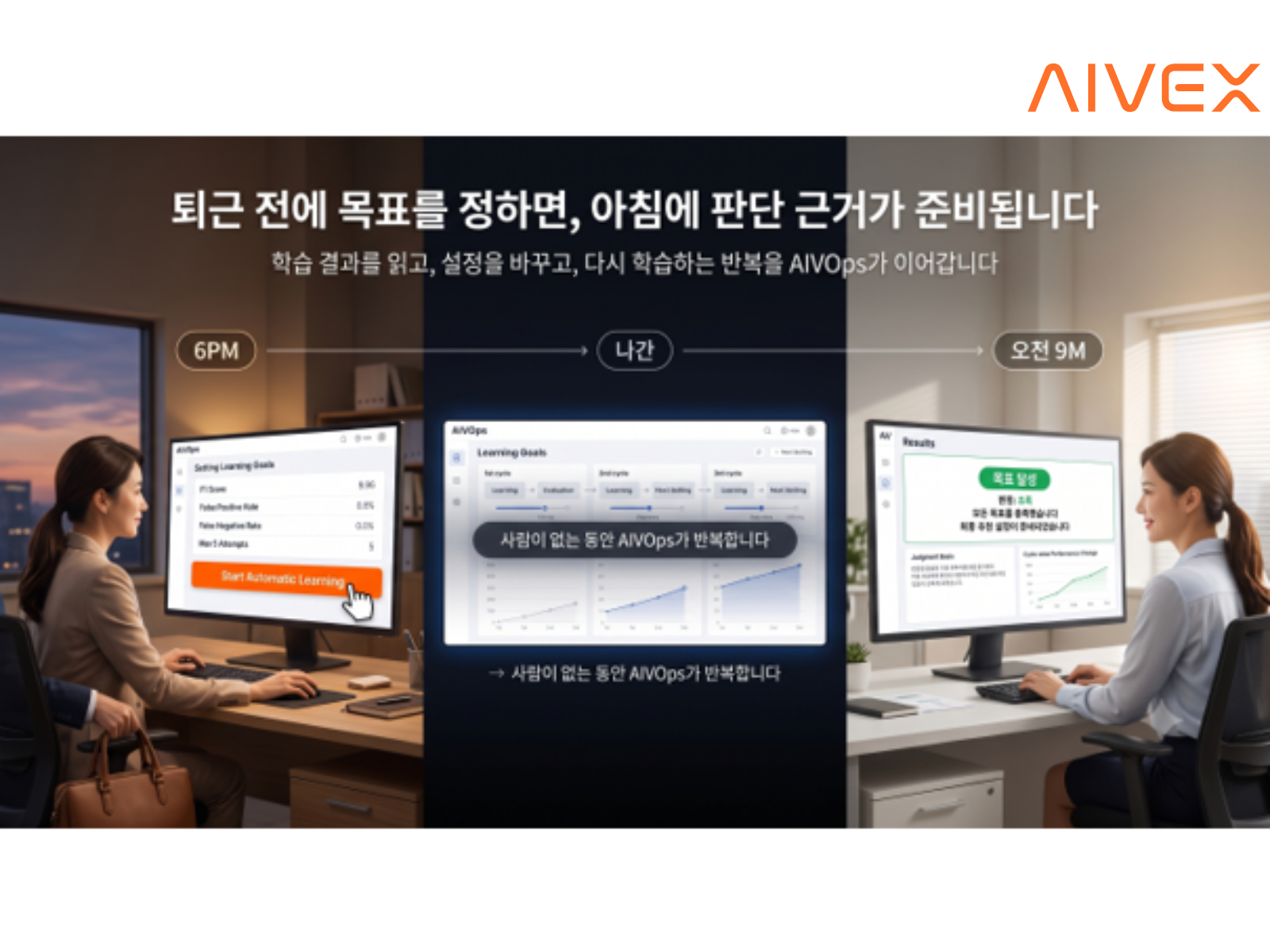
How to Interpret Training Results Without a Model Expert
The need for an inspection model in a factory is never a one-time occurrence. New product lines are introduced, the types of defects that need to be detected increase, and equipment changes. Each time, someone has to review the training results and decide what to do next.
2026.08.27
![[AI Robotics Field Notes (2)] What Role Should Reinforcement Learning Play in Robots?](/uploads/5cd9554c-cdd5-496f-9f8d-bc3448035c59.png)
[AI Robotics Field Notes (2)] What Role Should Reinforcement Learning Play in Robots?
Reinforcement learning once looked like the algorithm that would build robot policies from start to finish. We now use it in a different role — not as the lead, but as the corrector. This post lays out why that role is the right one, and how AIVEX's AI Robotics group actually puts it to use.
2026.08.25
FAQ
The questions we hear most often before robot solution rollout.
Q.If the robot is controlled based on an LLM, can field personnel operate it without any coding knowledge?
Yes, exactly. There is no need to handle complex robot teach pendants. We provide an intuitive natural language command system and a block-based No-Code interface. This allows field operators with absolutely zero coding background to easily configure, manage, and flexibly modify the robot's task sequences on their own.
Q.Is it possible to seamlessly integrate and control robot arms that are already installed in the factory?
Yes, it is possible. Even for older, legacy robots, we establish the optimal integration plan by diagnosing their supported communication protocols and I/O interfaces in advance. We can build an environment where legacy equipment is seamlessly integrated and controlled alongside the latest systems on a single platform, eliminating the need for a complete replacement.
Q.Can the system flexibly respond to part number changes or the addition of new items in high-mix production lines?
Yes, it is highly adaptable. Shifting between existing part numbers can be done instantly by calling up a pre-registered recipe within the system. When introducing new items, we proactively calculate the required data volume, retraining period, and costs, designing the system so that on-site personnel can manage updates flexibly with minimal operational effort.
Q.Can the system be integrated with our existing PLC, MES, and conveyor systems?
Yes, we support seamless integration. We natively support major industrial communication protocols such as EtherNet/IP, Modbus TCP, and CC-Link. This ensures collision-free integration with your existing PLCs, MES, and conveyors, while also comprehensively linking your production performance and quality data.
Q.Can you meet the Tact Time of our existing production line (including recognition, motion, and gripping)?
Yes, we can. We strictly verify the total cycle time in advance by calculating the combined duration required for vision recognition, robot motion, and gripper grasping. Based on this thorough assessment, we configure the optimal system to meet the target Tact Time required by your production line.
Q.Can picking be performed in a random bin state, or is aligned feeding mandatory?
Yes, unmanned picking is entirely possible even in a random bin state. By utilizing 3D vision-based Bin Picking technology, we can accurately recognize and pick up objects that are randomly overlapped or piled together. For processes that allow flat, aligned feeding, 2D vision is more than sufficient. We will propose the most efficient method tailored to the exact loading conditions of your site.
Completing a robot solution that erases the boundary between technology and the floor.
Based on your floor's situation, infrastructure environment, and rollout flow, we review the PoC scope and adoption impact together — reducing duplicated investment.