Floor-led MLOps platform for AI inspection and robotics
Training to retraining unified as a single operating flow — reducing reliance on dedicated AI staff and enabling the floor team to continuously manage model performance.
On-floor operating bottlenecks
Three breaks that surface in operations after inspection AI goes live
Resolve the core bottlenecks to respond to shifting environments and limited data on the floor.
Dataset
Training parameters
Model versions
Manual collection and labeling delay model improvement
Interpreting training results and tuning parameters depends on dedicated specialists' experience
Per-line rollout status and change history are fragmented across teams
Datasets, judgment rules, and inspection history managed together, with retraining candidates surfaced automatically
LLM-driven tuning guidance analyzes performance bottlenecks and recommends the next training parameter set
Per-version model history and rollout tracking architecture
Standardized data preprocessing and reduced repetitive workload
Fewer training cycles — non-specialists can improve the model
Faster rollback and root-cause analysis when incidents occur
Manual collection and labeling delay model improvement
Datasets, judgment rules, and inspection history managed together, with retraining candidates surfaced automatically
Standardized data preprocessing and reduced repetitive workload
An operating loop for inspection AI beyond a one-time rollout
From data collection (AIVData) to model retraining (AIVOps), connected by an extensible architecture so investment doesn't get duplicated.
 1
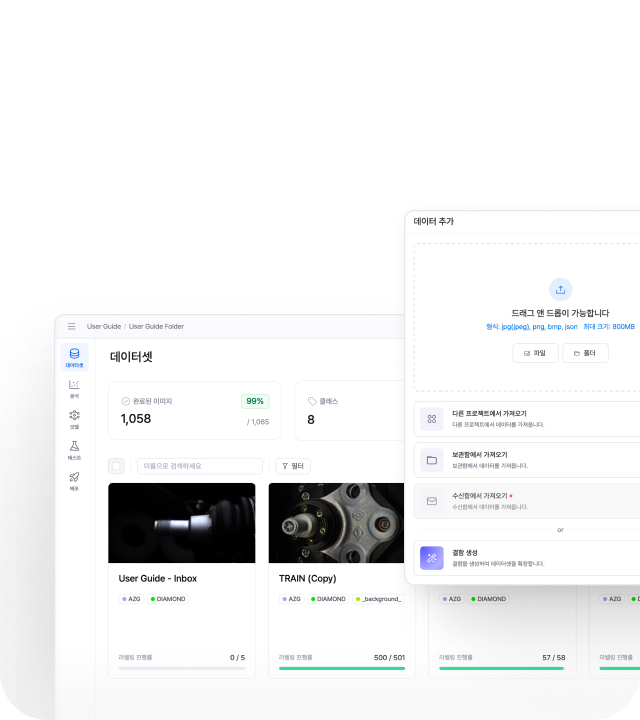
1Data preparation
Inspection images and judgment rules are linked so retraining datasets are standardized.
 2
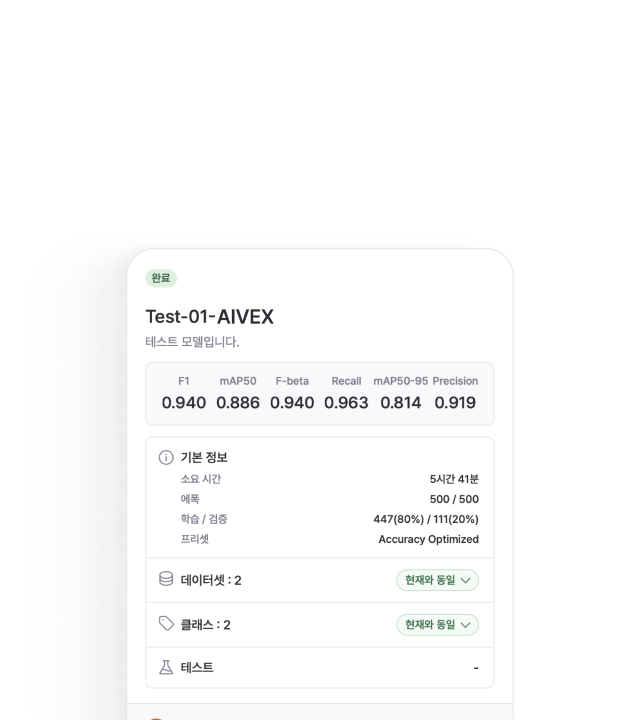
2Model training
Automated model search recommends parameters aligned to floor targets — usable even by non-specialists.
 3
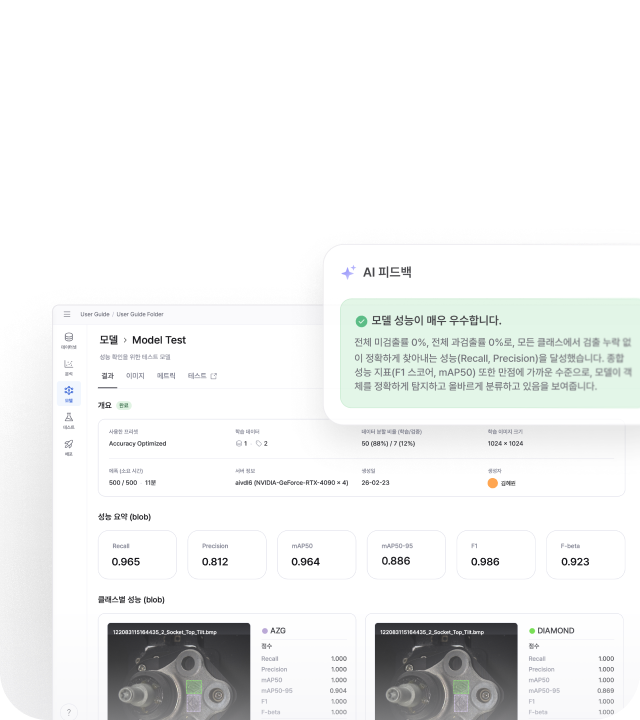
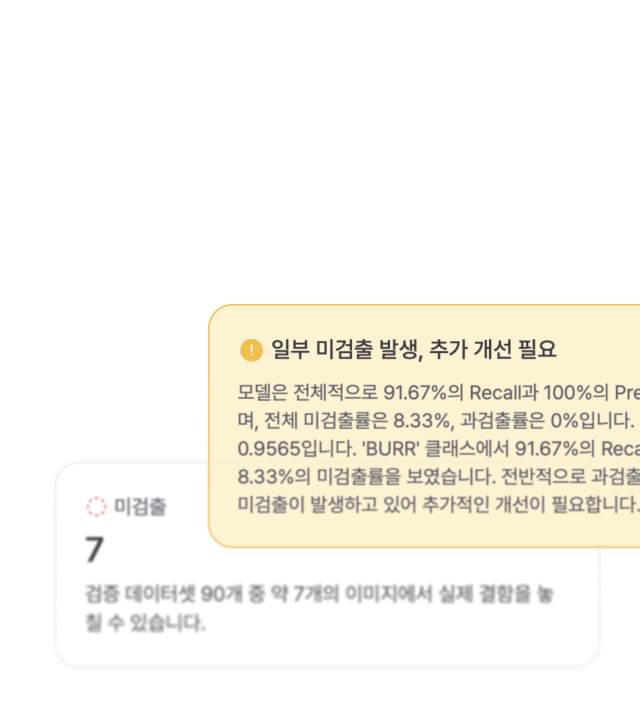
3Performance validation
Recall, miss rate, and false-call rate are measured against the customer validation set to judge readiness for rollout.
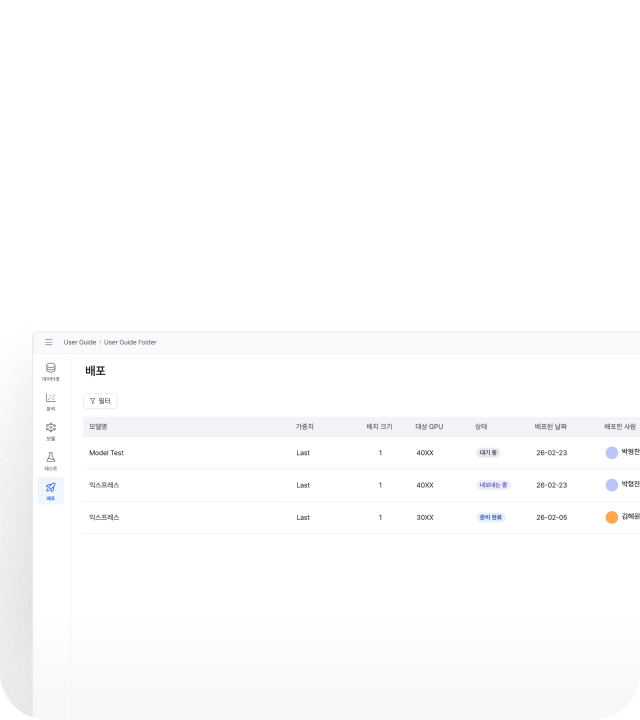 4
4Deployment
Models are rolled out, rollback paths are verified, and deployment records are kept under one trail.
 5
5Feedback collection
False positives, missed defects, and drift signals from operations are funneled back into the improvement cycle.
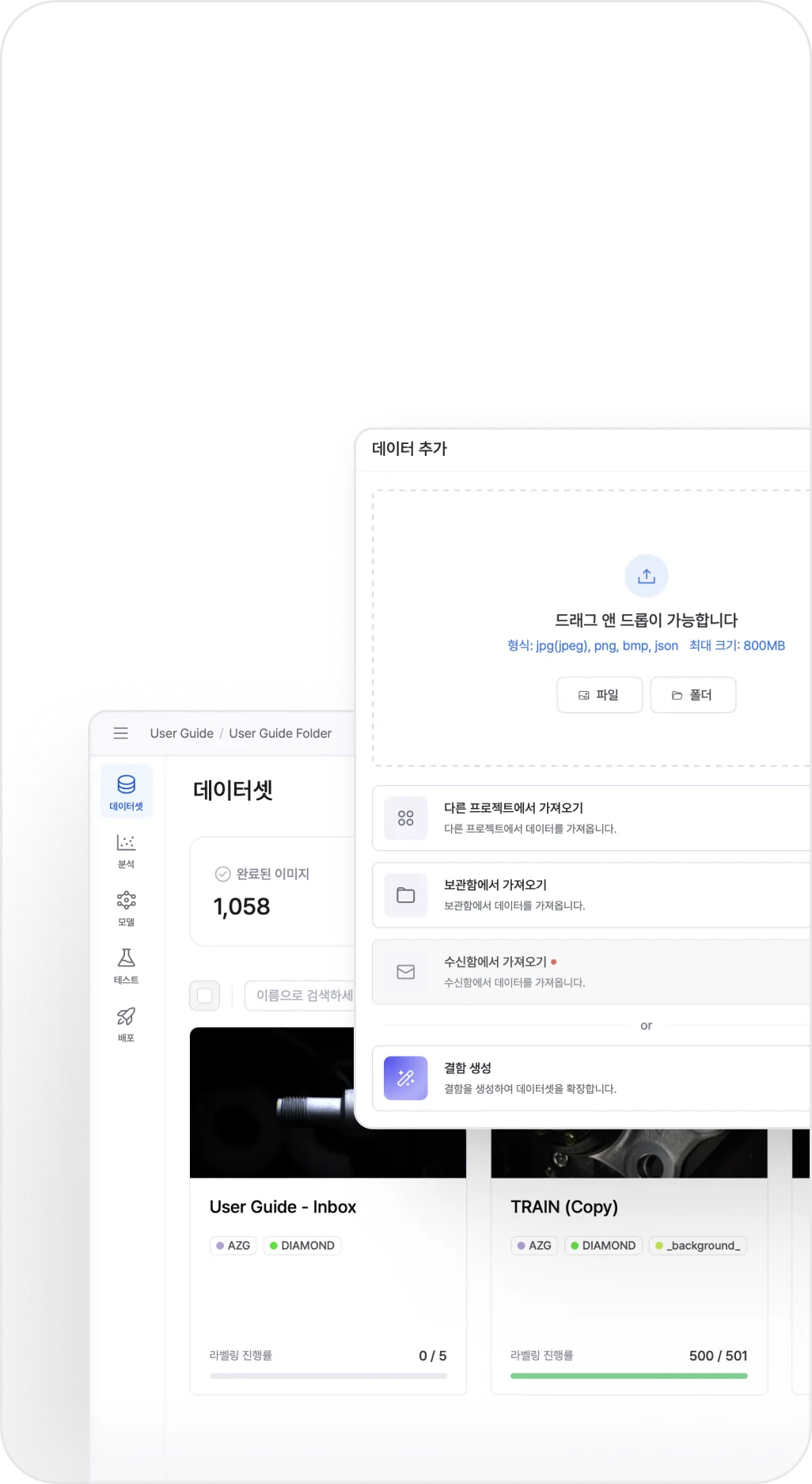 1
1Data preparation
Inspection images and judgment rules are linked so retraining datasets are standardized.
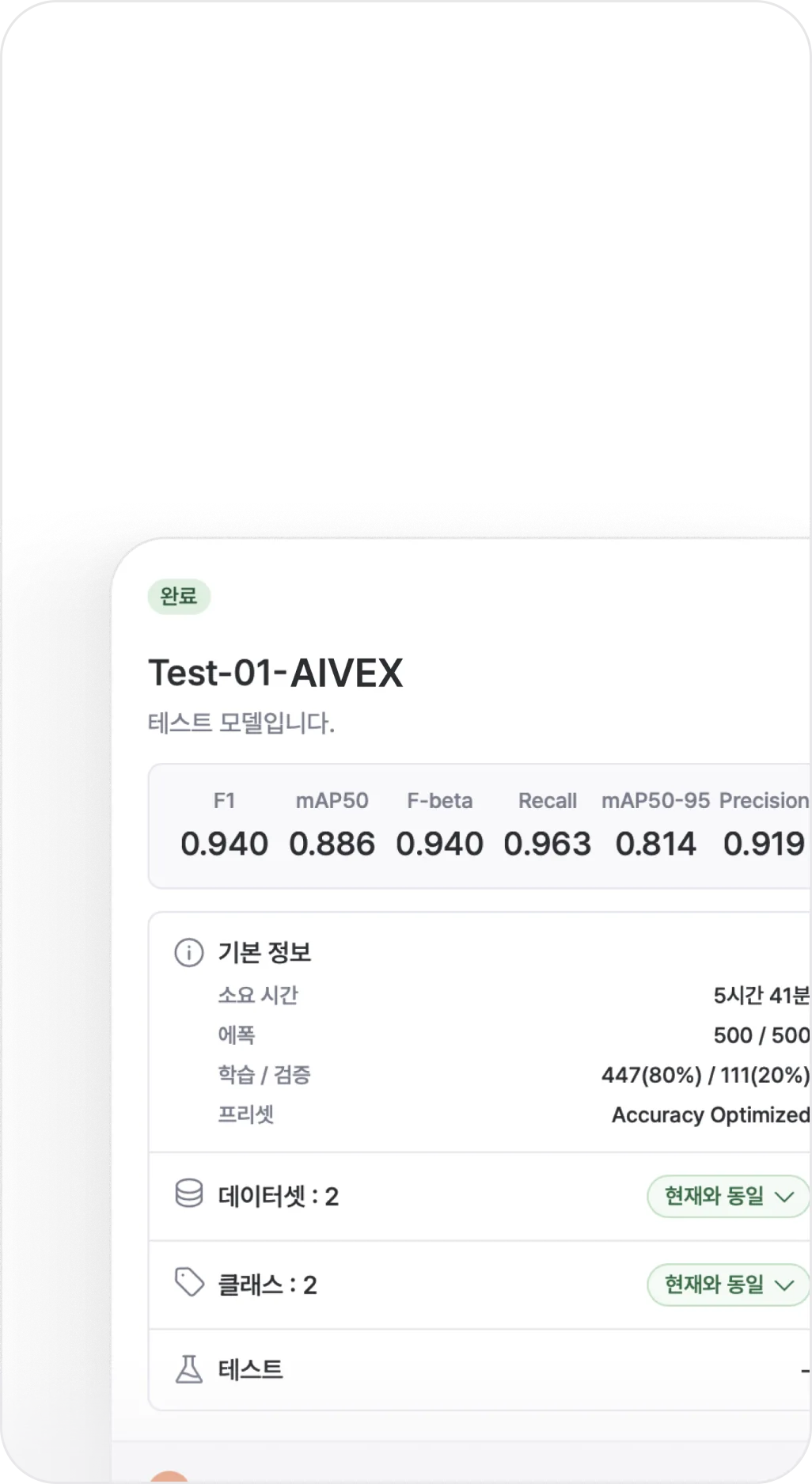 2
2Model training
Automated model search recommends parameters aligned to floor targets — usable even by non-specialists.
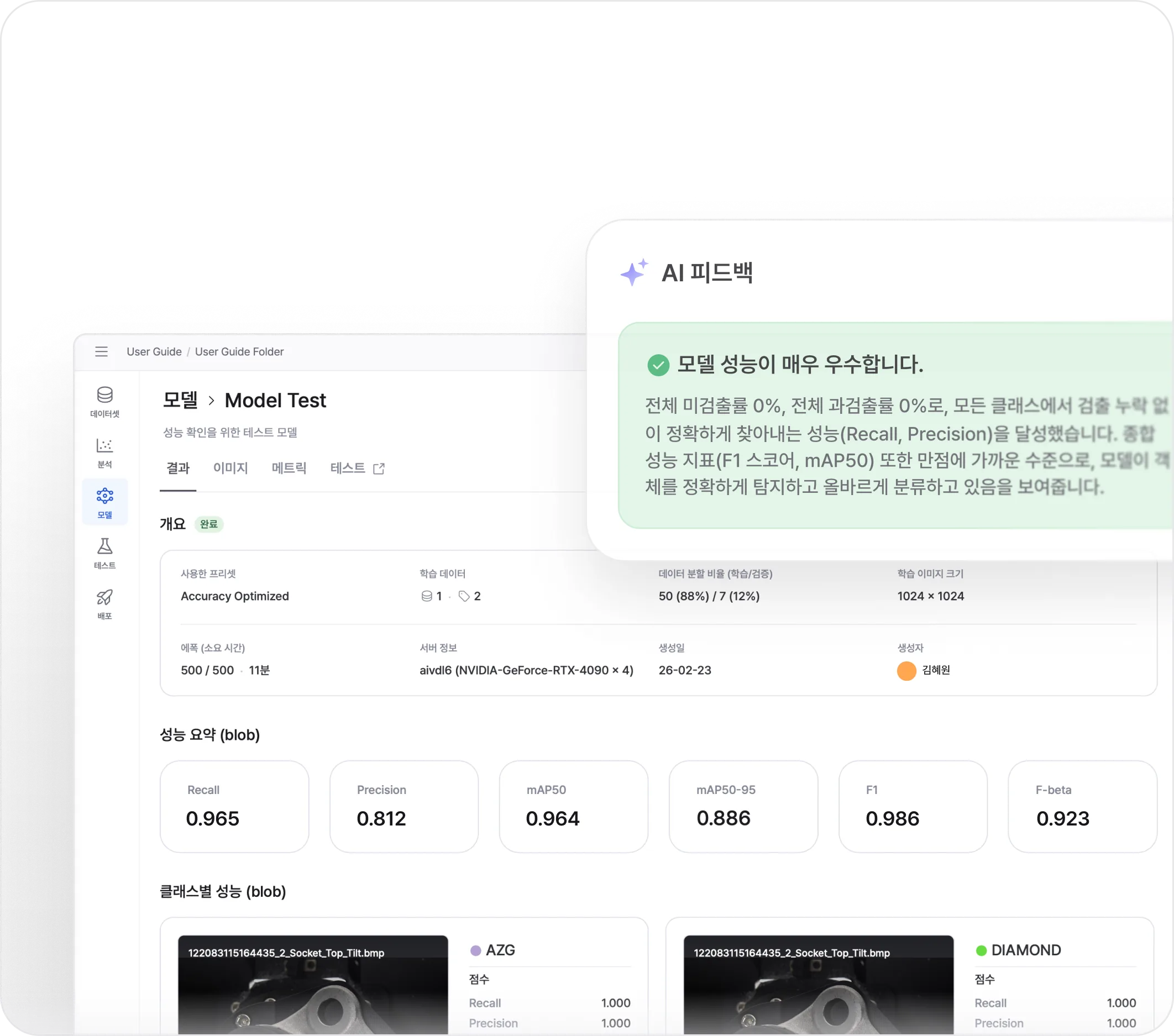 3
3Performance validation
Recall, miss rate, and false-call rate are measured against the customer validation set to judge readiness for rollout.
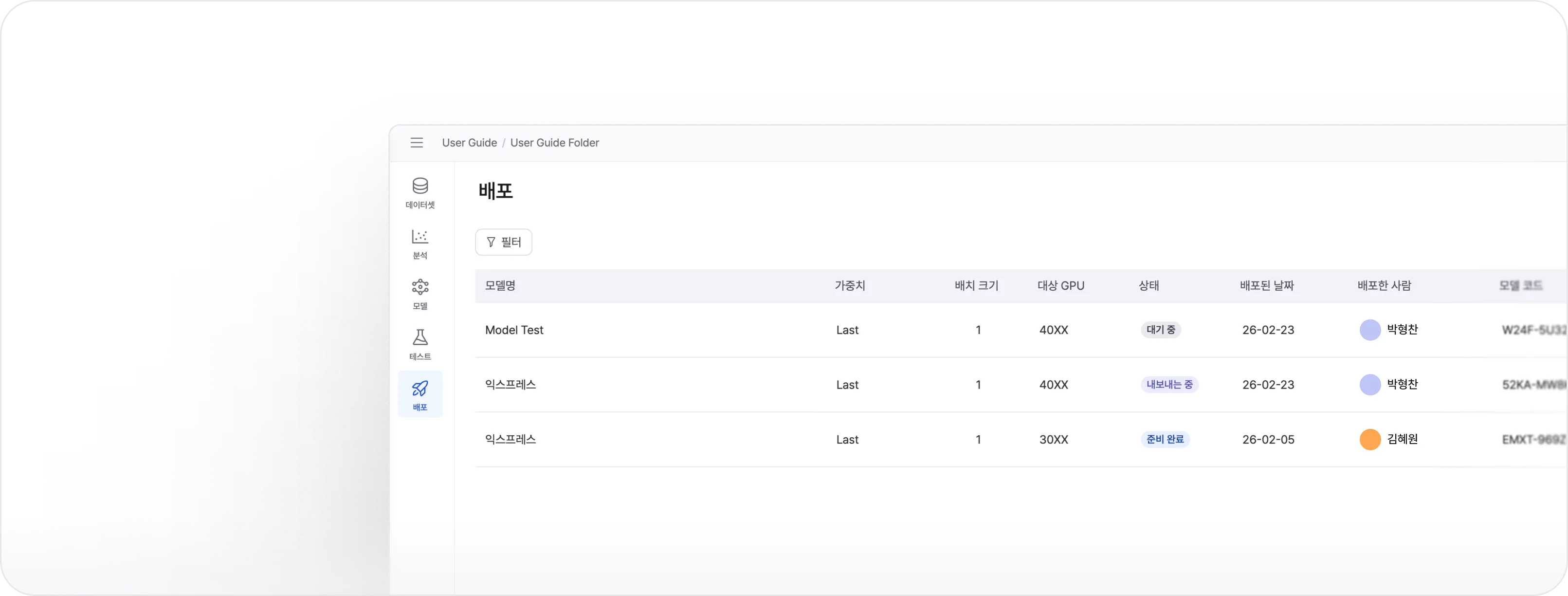 4
4Deployment
Models are rolled out, rollback paths are verified, and deployment records are kept under one trail.
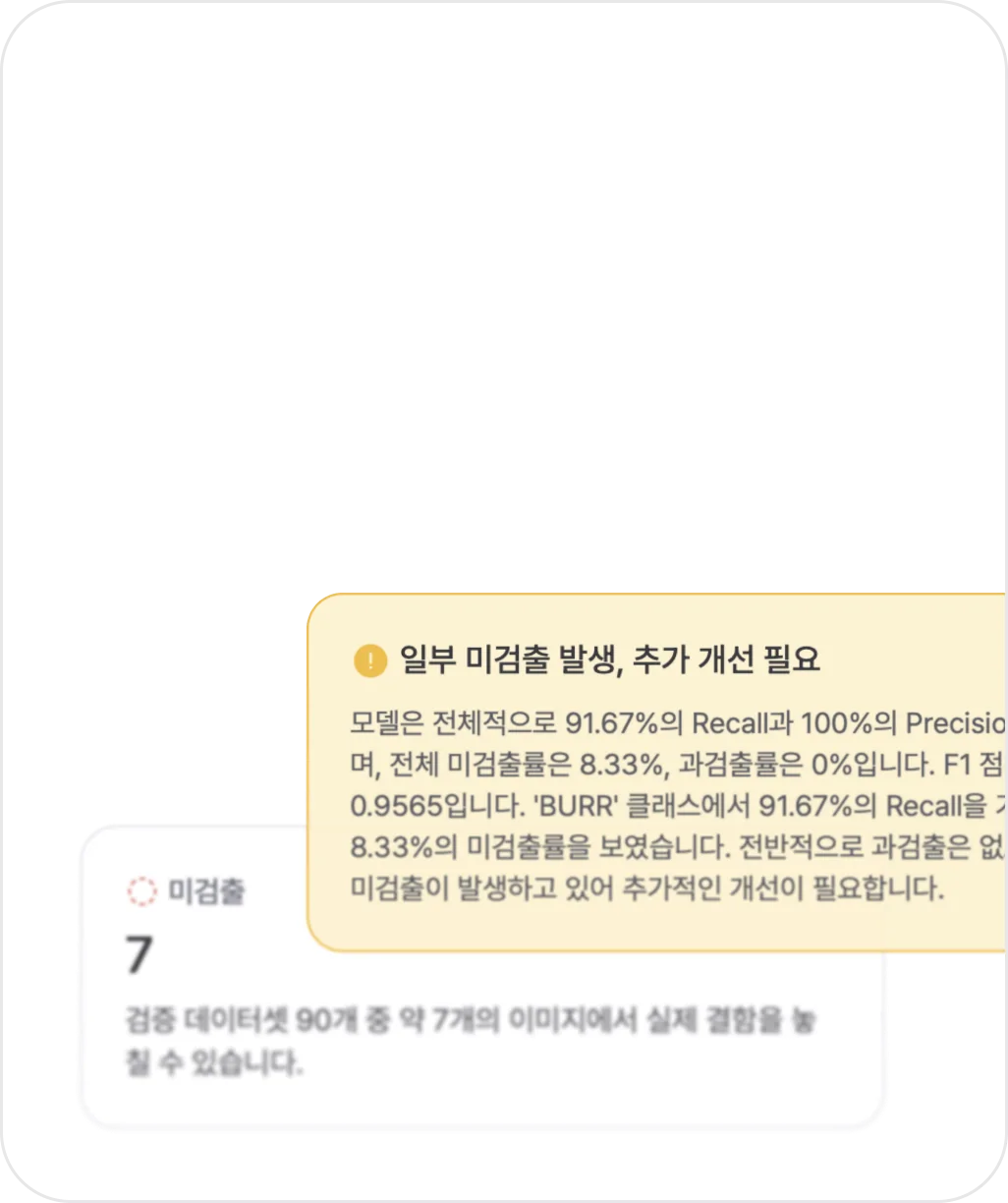 5
5Feedback collection
False positives, missed defects, and drift signals from operations are funneled back into the improvement cycle.
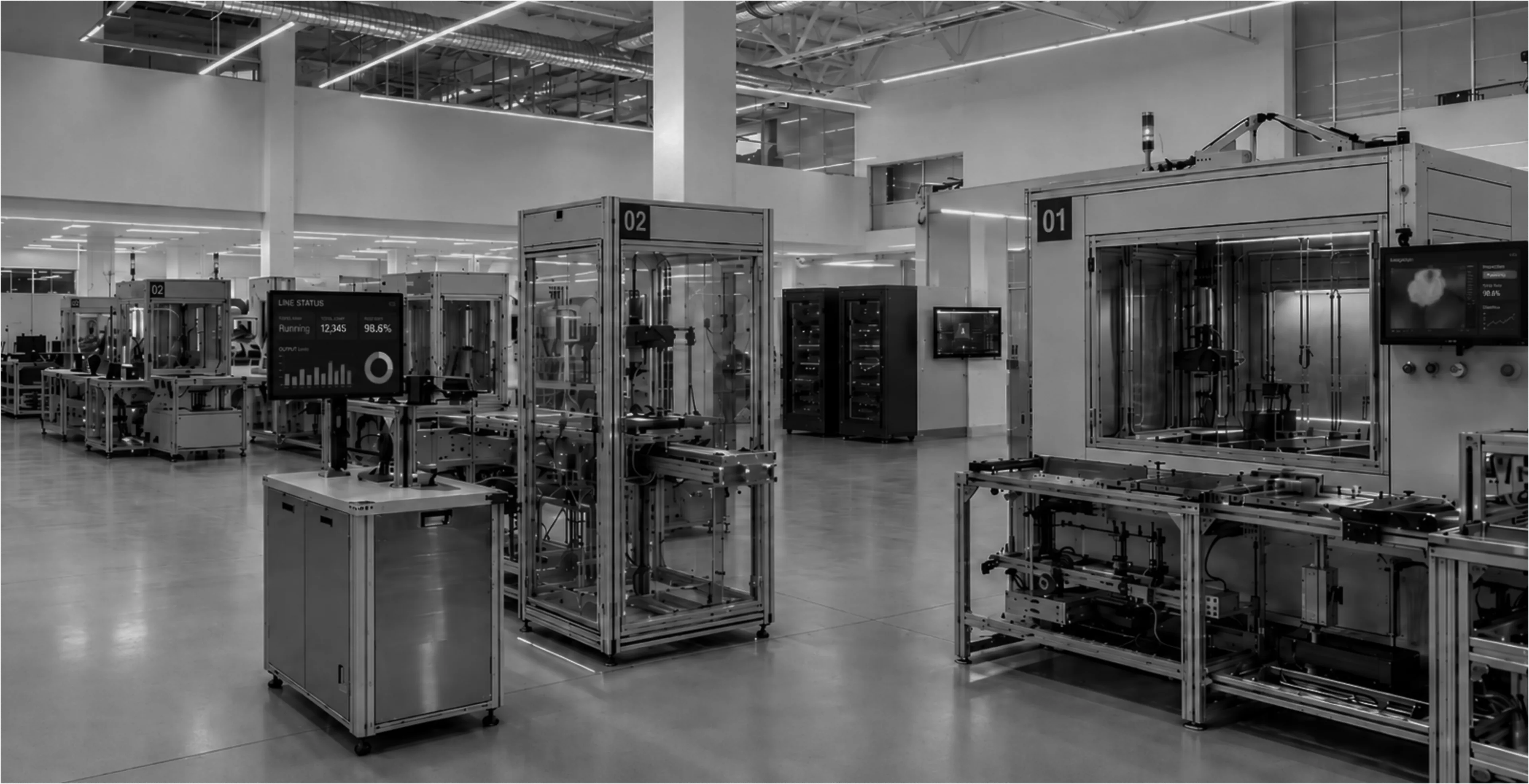
Quantitative performance, measured on an agreed validation set
Instead of blanket headline numbers, we measure against the conditions on your floor and evaluate whether the targets are actually met.
*Actual figures vary with customer data and measurement conditions, and are reported in the PoC results summary.
Recall
Share of true defects the model flagged as defects.
Measured against the customer validation set, with missed cases cross-checked.
Miss rate
Share of true defects passed through as OK — directly tied to quality risk.
The acceptable range is agreed before PoC, and pass/fail is judged on those terms.
False call rate
Share of good parts flagged as defects — directly tied to review load.
We find the right balance against miss rate given line speed and reviewer capacity.
Core capabilities for floor-led operations
Designed to lighten the cost of hiring outside AI staff and keep the pipeline under the control of the people running the line.
- Labeling
AI auto-labeling
AI detects and labels defect regions in inspection images — manual workload drops while dataset quality goes up.

- Defect generation
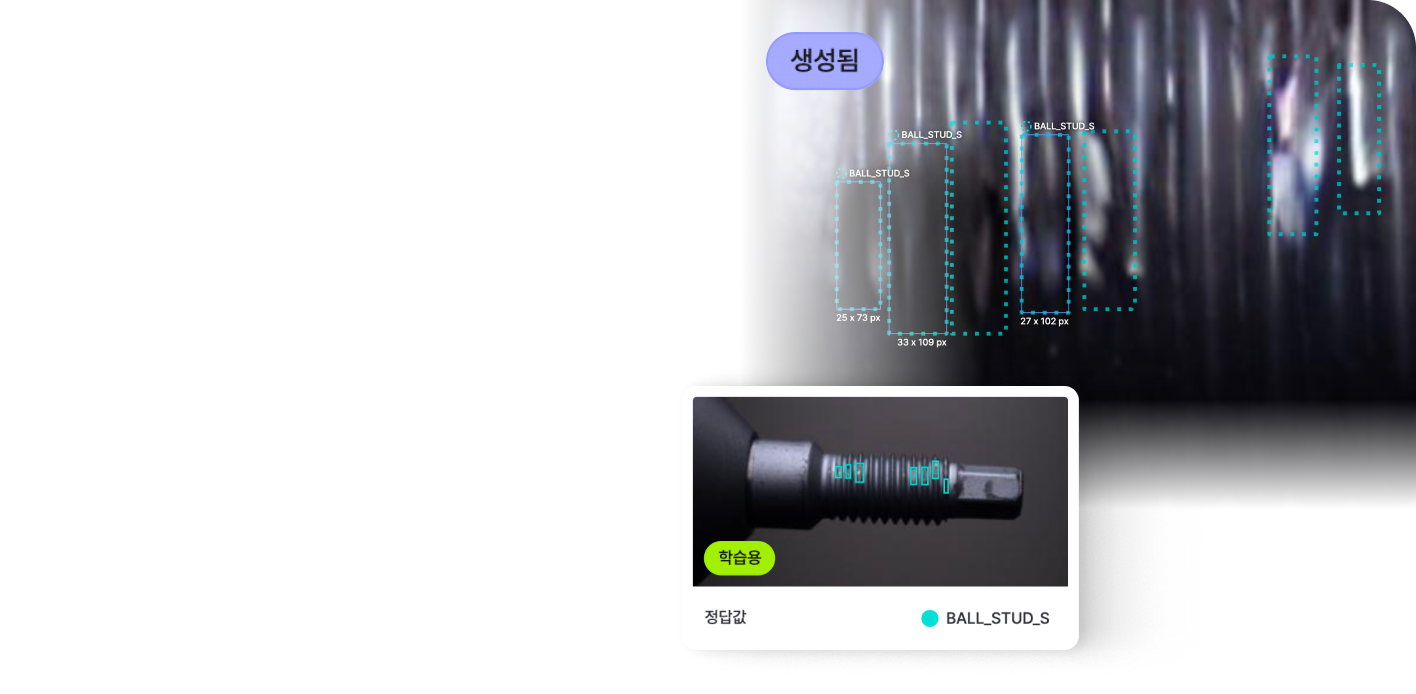
Defect data generation
AI-generated defect samples supplement scarce real-world data and close coverage gaps.
- Analysis
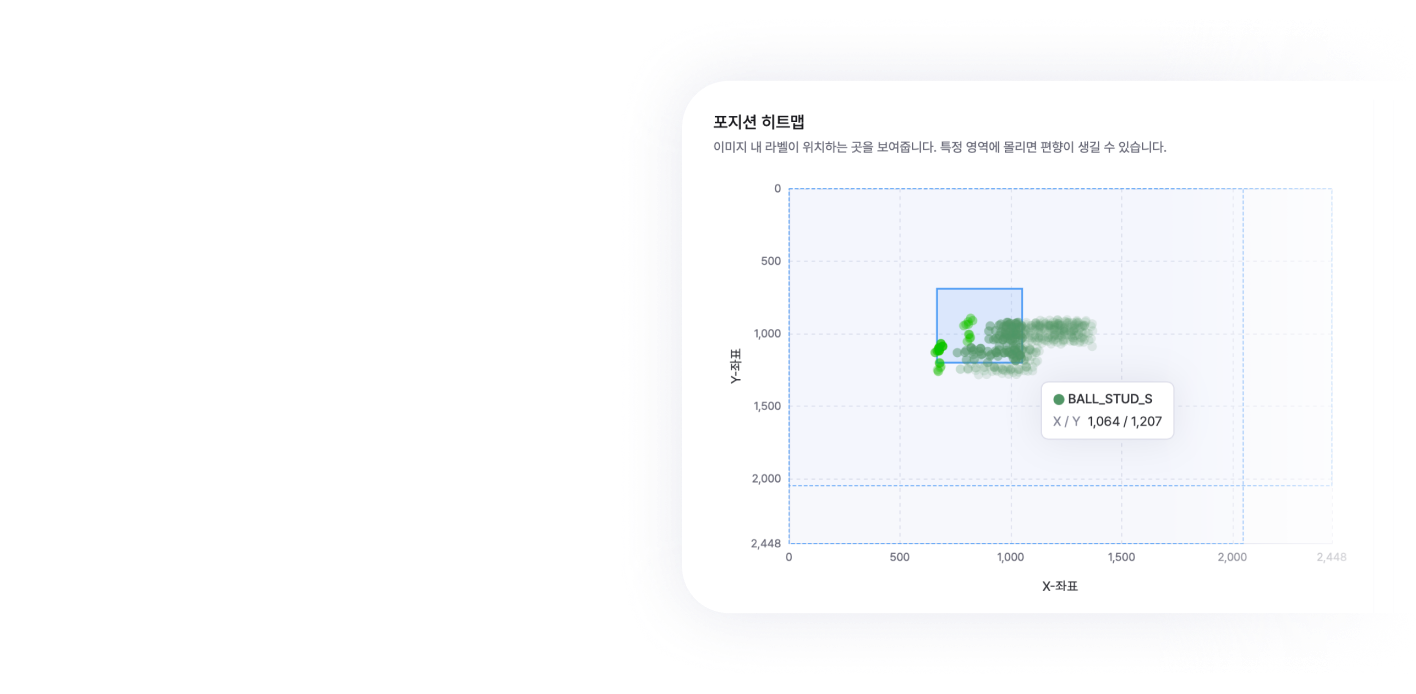
Dataset analytics
Label distribution, position, size, and inspection outcomes — visualized so dataset bias and improvement priorities surface fast.
- Model recommendation
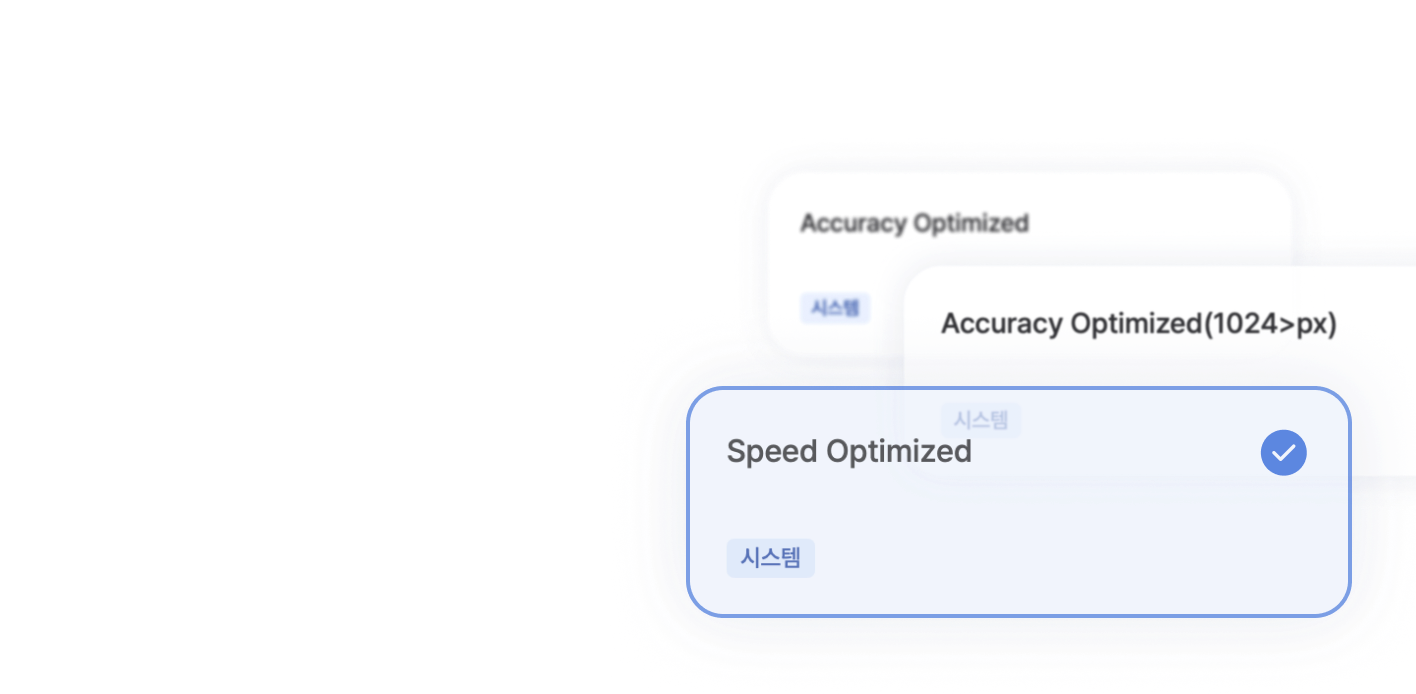
Model & parameter recommendation
Dataset and training analysis inform the next model and parameter set, supporting iterative tuning toward the target performance.
Adoption impact and operating efficiency, specialized for the manufacturing inspection domain
We cut the duplicated-investment risk of generic tools or one-off SI engagements, and provide inspection-specific capabilities built to scale.
AI specialists
Operating architecture led by floor practitioners
Direct hiring and maintenance overhead
Tools only — separate operators required
External staff only during build
Things to confirm before rollout and integration
Check the questions we hear most often
Q.Can teams without AI expertise operate this?
It provides automated model discovery and standardized operating procedures, reducing the burden on dedicated AI personnel and enabling quality and production teams to handle training and Deployment directly. AIVEX engineers support initial setup and exception handling, lowering the barrier to adoption.
Q.Does it integrate with existing training pipelines and systems?
By adopting a scalable architecture, it reduces sunk costs in existing systems. The specific scope of integration is assessed during the PoC phase.
Q.Can it run on-premise or in air-gapped networks?
We support on-premise, private cloud, and hybrid environments while complying with on-site security and compliance requirements. We design deployment architectures tailored to site conditions to meet production network segmentation requirements.
Q.Can the entire operational process—from labeling and AI training to testing and deployment—be automated after data collection?
Yes, it is possible. AIV Ops establishes a Continuous Training and Integration/Deployment (CT/CI/CD) pipeline to execute the entire AI operational process fully automatically based on specific cycles or conditions. It minimizes administrator intervention while providing automated reports (Model Cards) that display the model's training results and transparency at a glance.
Experience proven AI innovation
firsthand on your floor
Based on your current data infrastructure and rollout flow, we review the PoC scope and the impact you can expect — together.