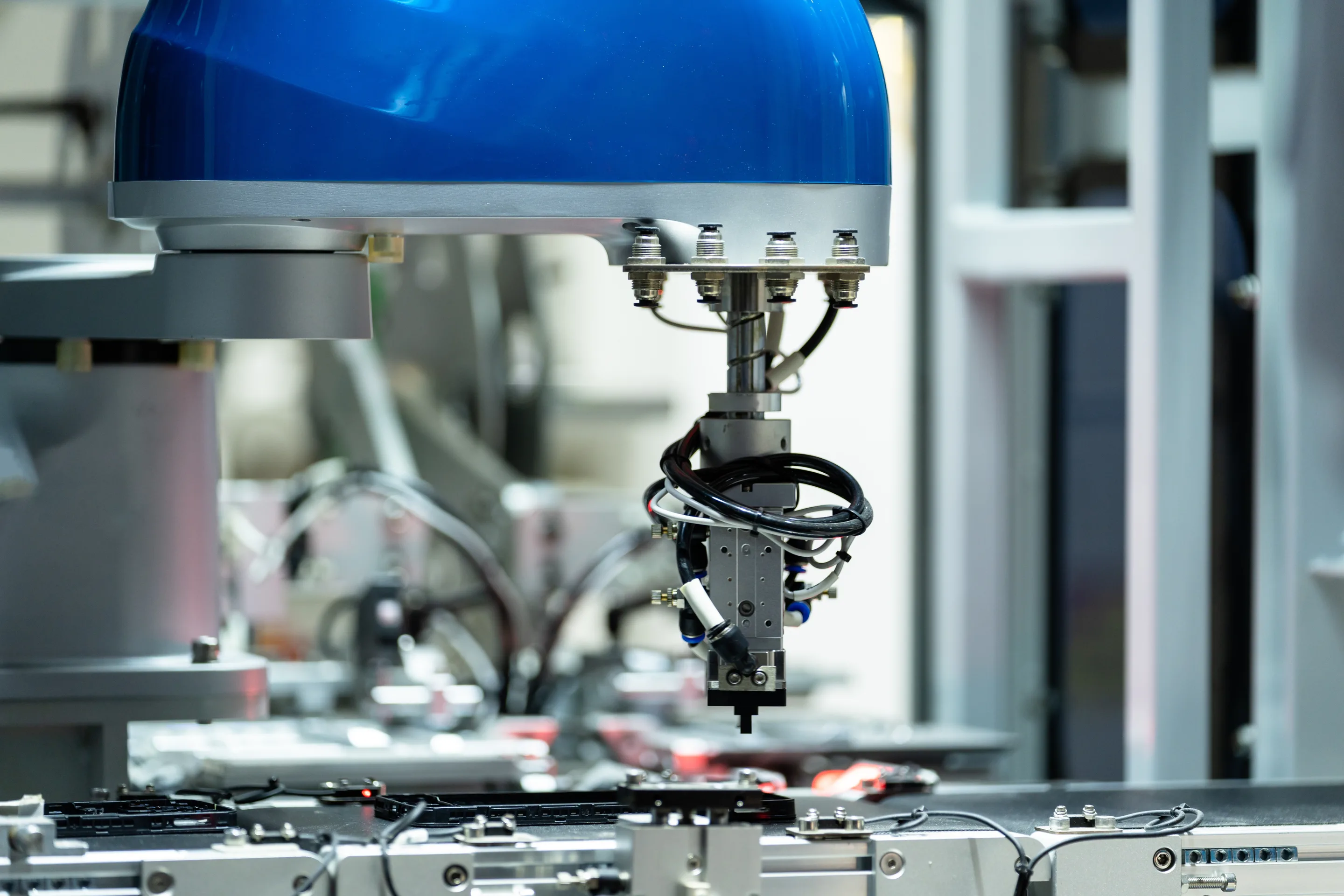
Vision AI that sees the manufacturing floor accurately
From fragmented hardware setup to AI modeling, judgment, and feedback — integrated as one flow to deliver the smoothest inspection workflow on the floor.
On-floor operating bottlenecks
Tailored inspection that adapts to on-floor issues
By analyzing the customer's actual data and environmental constraints from multiple angles, we establish the most appropriate and stable judgment criteria for each process.
Ambiguous judgment criteria across various types of defects
Apply a stable defect detection algorithm
Established accurate judgment criteria to maintain consistent production yield
From vision model to inspection operation
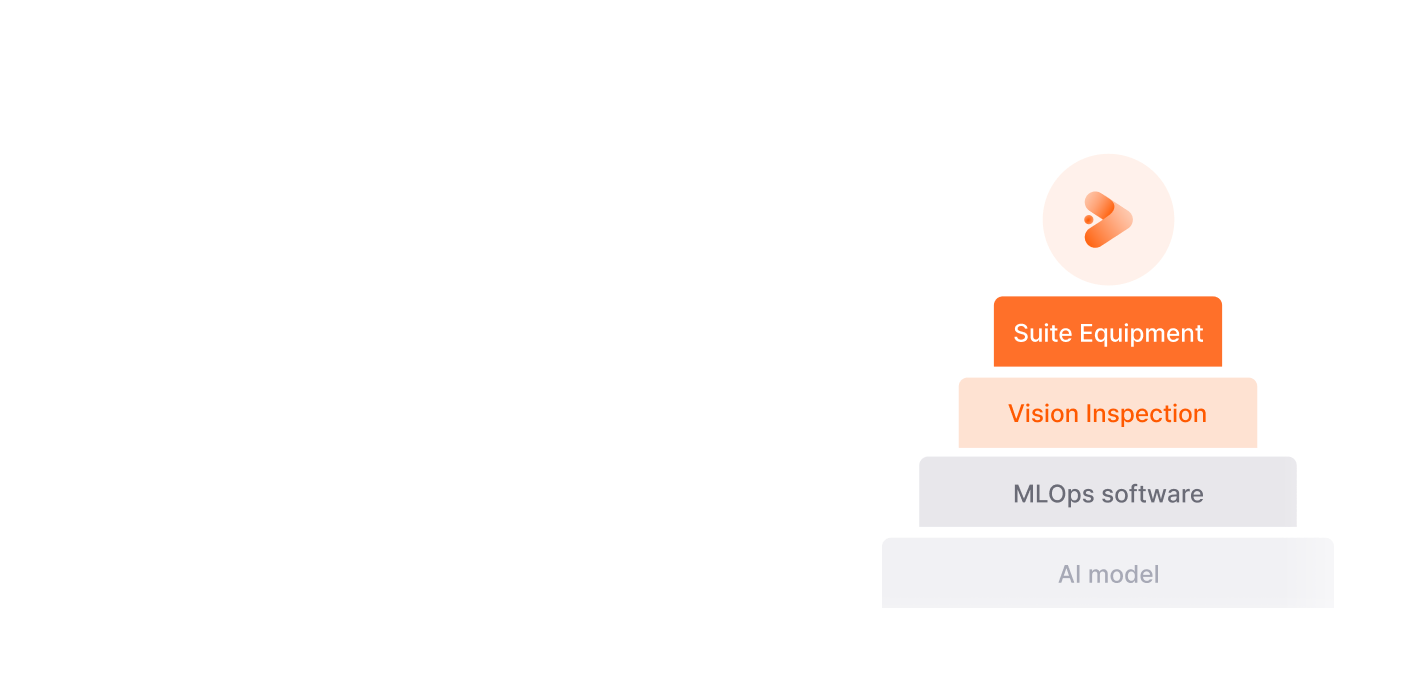
The key is securing reusable model assets and operational flow even as inspection targets and production conditions change.
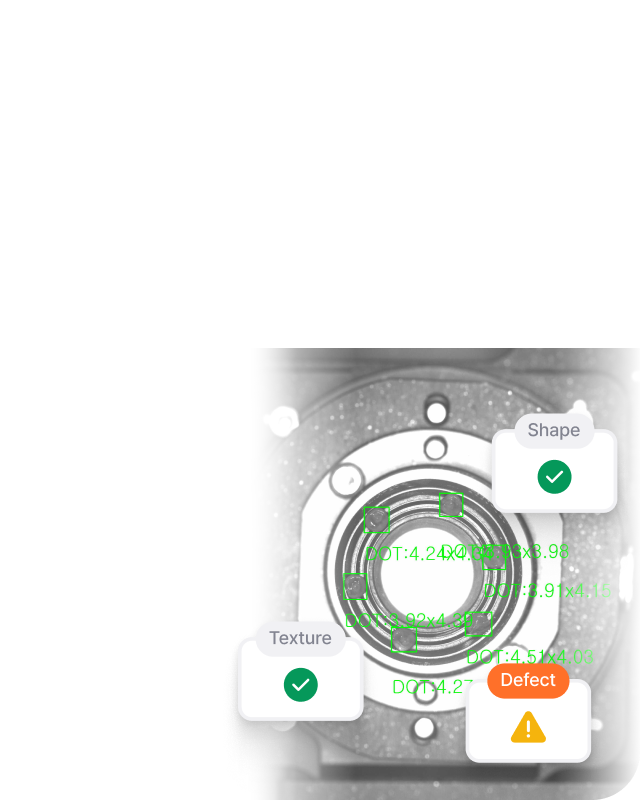 Industry-trained model
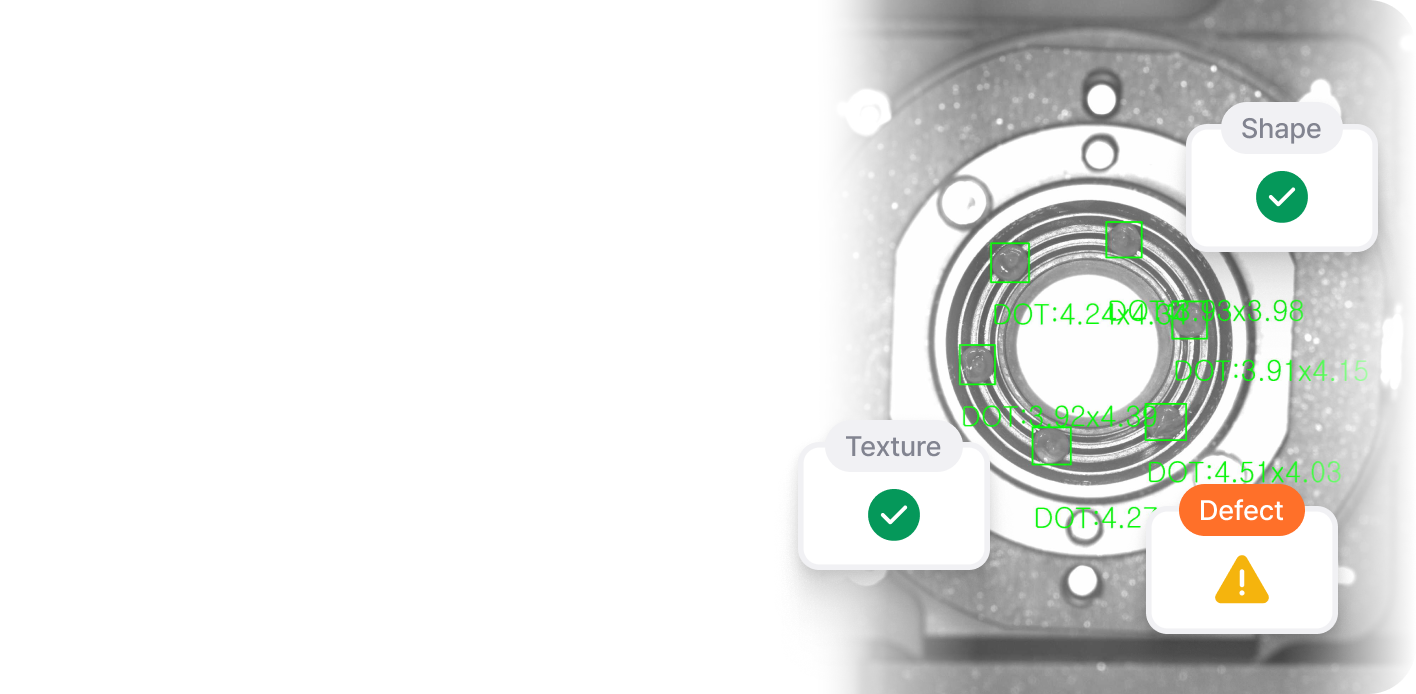
Pre-trained approach that understands texture, shape, and micro-defect patterns
- Initial validation on small datasets
- Retraining candidate management per product group
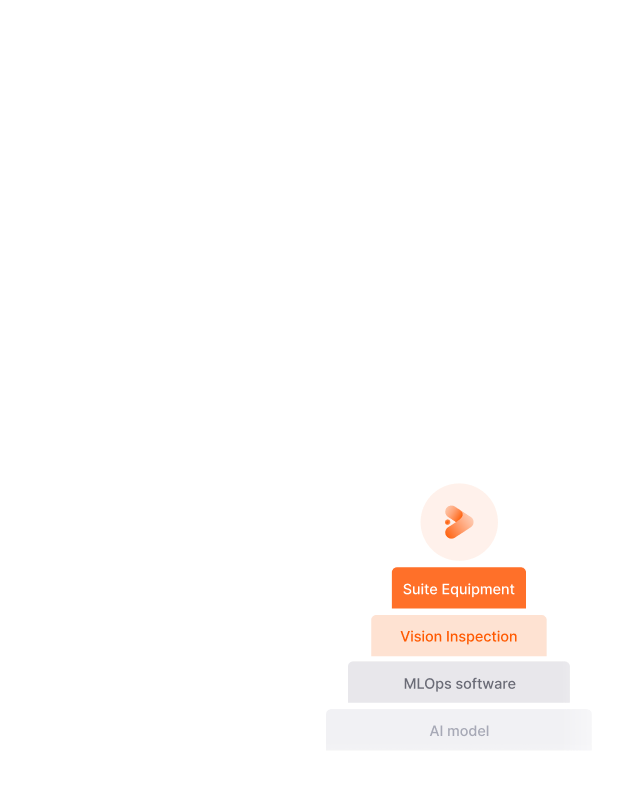 Custom operation modes
Standardized inspection types fast, high-difficulty processes customized
- Leverage similar-process solutions to shorten lead time and secure stability immediately
- For unprecedented, demanding environments, optimize end-to-end — AI model, rule-based algorithms, and the system — to match on-site conditions
- From SW-only deployment to optics setup and equipment build (Turn-key), delivered flexibly to match the customer's infrastructure
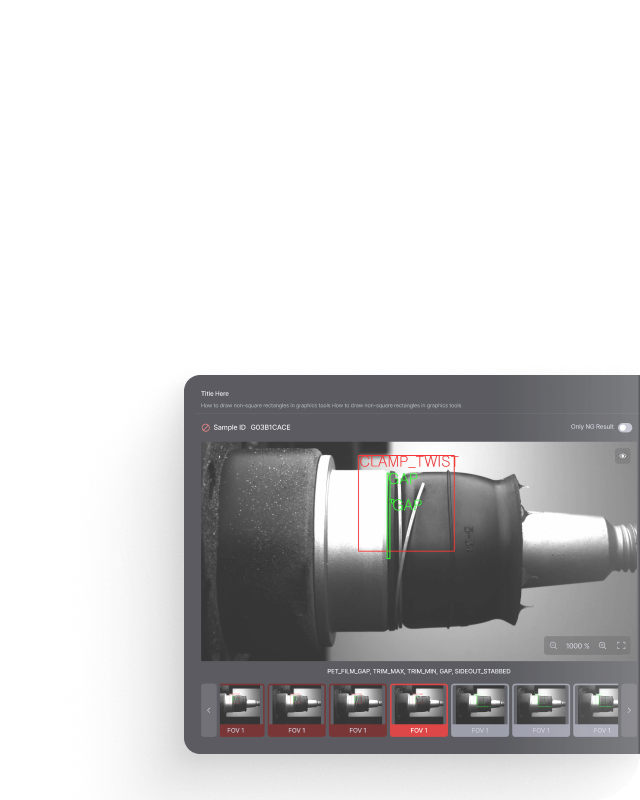 Quick review
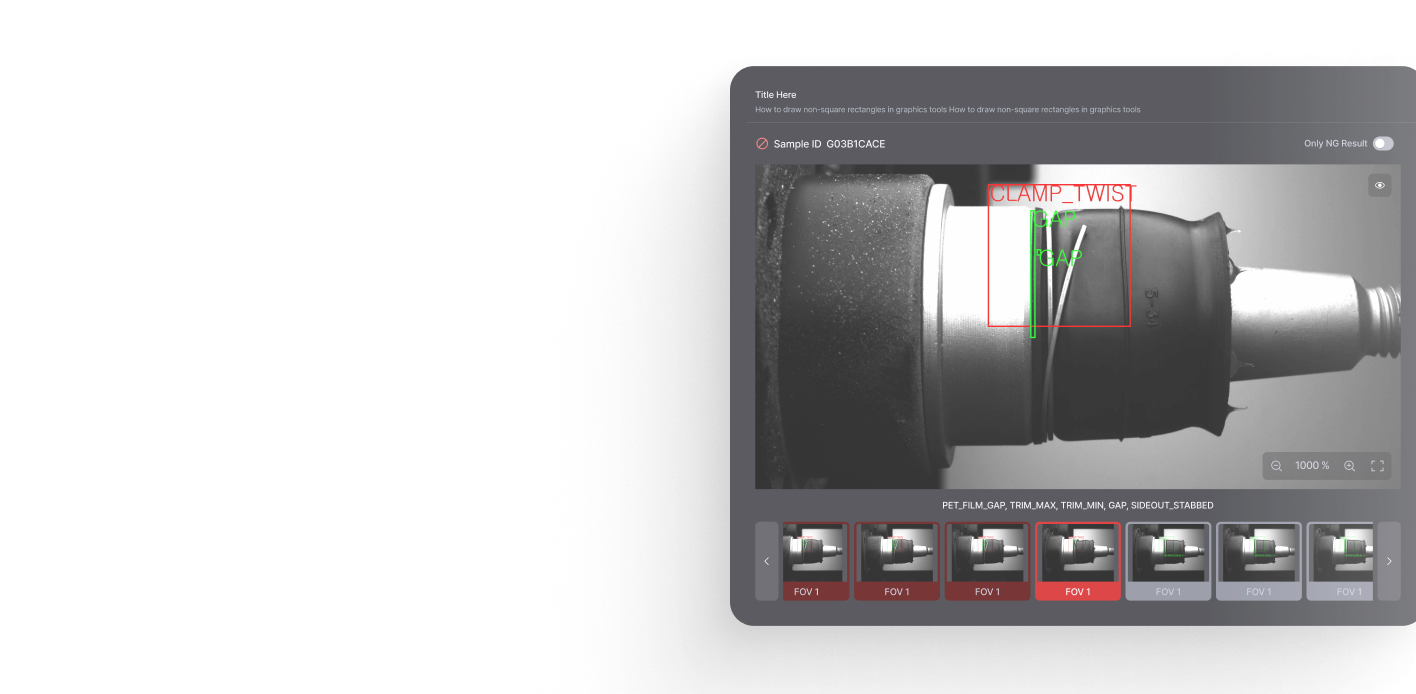
Designed for operators to check review results quickly and easily
- Detection results and reference images
- Confidence scores and review history
 Condition-based validation
Inference performance validation system
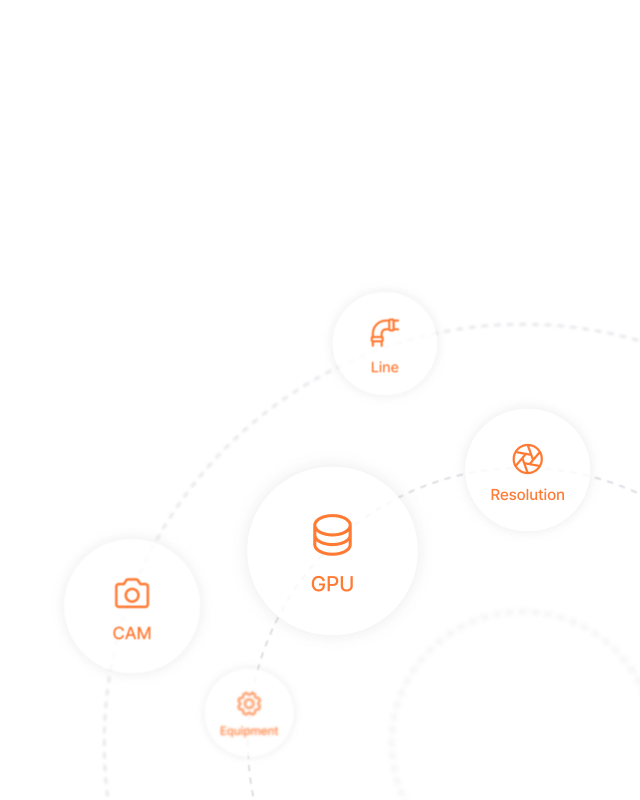
- Validate throughput and latency by line speed, camera count, resolution, and GPU/edge equipment conditions
- Industry-trained model
Pre-trained approach that understands texture, shape, and micro-defect patterns
- Initial validation on small datasets
- Retraining candidate management per product group
- Custom operation modes
Standardized inspection types fast, high-difficulty processes customized
- Leverage similar-process solutions to shorten lead time and secure stability immediately
- For unprecedented, demanding environments, optimize end-to-end — AI model, rule-based algorithms, and the system — to match on-site conditions
- From SW-only deployment to optics setup and equipment build (Turn-key), delivered flexibly to match the customer's infrastructure
- Quick review
Designed for operators to check review results quickly and easily
- Detection results and reference images
- Confidence scores and review history
- Condition-based validation
Inference performance validation system
- Validate throughput and latency by line speed, camera count, resolution, and GPU/edge equipment conditions
Scenarios where you can expect the biggest impact at rollout
Unwavering accuracy across countless variables and limited data. AIVision delivers the inspection answer for the most demanding manufacturing environments.
- 1
Surface defect inspection
Detects micro-defect candidates on metal, film, batteries, and electronic parts — reducing review workload.
- 2
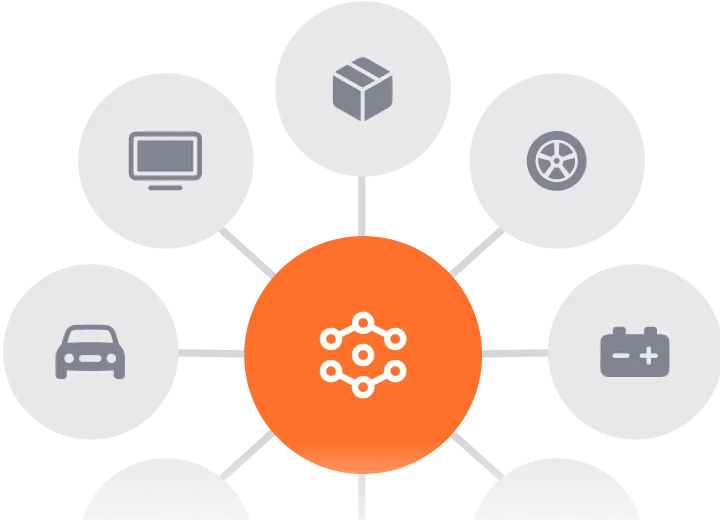
Multi-product visual inspection
Systematically manages inspection criteria and model improvement candidates in environments with frequent SKU changes.
- 3
Processes with limited defect samples
For new processes without enough defect data, we approach with anomaly detection combined with on-site feedback.
Uncompromising, overwhelming performance
From large-scale data processing to ultra-fast 100% inspection, providing the optimal inspection environment that doesn't slow down floor throughput.
 High-resolution data processing
Large-scale high-speed processing
Inference and data storage at 87 MB/s
 Micro-defect precision detection
Deep-learning inspection for complex parts
Inference and data storage at 55 MB/s
 Mass production line optimization
Ultra-fast full inspection without error or delay
150,000 units/day full inspection · pure Vision judgment under 0.3s
The differentiation of the foundation model, AIVEX starts differently from the beginning.
Unlike generic AI that demands clean data, we learn while overcoming the scarcity of defect data and labeling noise that are inevitable on the manufacturing floor.
 4,284 images
Why is AIVEX's foundation model special?
- Noise-Robust Loss FunctionEven when mislabeled training data is mixed in, the model filters it out on its own and maintains accuracy.
- Long-tail SamplingRare defects that almost never occur on the floor are trained with the same weight as frequent defects.
- Up to 3× faster processing on the same hardwareMore inspection throughput on your current hardware without paying for more expensive servers.
- World's first mass production of large-scale full-surface inspectionReference: a leading Korean manufacturer.
Field application cases
AIVEX has built inspection automation and quality improvement cases across automotive, battery, precision components, logistics, and other manufacturing fields. See the results based on actual process conditions and operating data.
The Heart of Deep Learning Vision Inspection: Building a Platform Environment Where Vision Engineers Can Focus Solely on the Model
AIVEX’s Vision Platform Group built a platform architecture that separates complex hardware control from software logic, enabling vision engineers to focus on deep learning models and inspection logic rather than infrastructure or hardware control code. By separating hardware and algorithms and introducing declarative inspection scenarios and fault tolerance, the platform improves deployment flexibility while maintaining both high performance and system stability.
2026.09.14

Are You Still Opening Folders on the Inspection PC to Check False Positives and False Negatives?
When we receive a request to reduce the false positive rate or a notification that a false negative has occurred, the usual response is to connect to the inspection PC on site, open File Explorer, and start looking for the relevant images. But across multiple production lines, this was one of the bottlenecks we encountered repeatedly. Finding images one by one and then querying the database again to reconstruct the inspection history for each image took a significant amount of time every time. In the process, the data would gradually become disconnected or inconsistent.
2026.09.08
![[AI Inspection: Challenges in the Field (6)] The Problem of Manually Aligning the Optical System Whenever the Product Variant Changes](/uploads/622e3c09-284e-474d-b221-7ae022c47557.png)
[AI Inspection: Challenges in the Field (6)] The Problem of Manually Aligning the Optical System Whenever the Product Variant Changes
The previous five parts focused on models and data. This article goes one step further upstream. No matter how good the model is, inspection performance will suffer if the imaging position changes every time.
2026.09.03
Wondering about rollout units and operating conditions?
Check the questions we hear most often
Q.Can AIVision be implemented on its own?
Yes, AIVision can be implemented independently. When deployed together with AIVData and AIVOps, the operational loop effect becomes even greater.
Q.What deployment modes are available?
We support three modes: turnkey (including camera and lighting), software-only, and model-only. The appropriate option is selected during the PoC phase to match line conditions.
Q.Is it compatible with existing cameras and line equipment?
It is compatible with major industrial cameras, lighting, and PLCs, and compatibility is assessed during the PoC diagnostic.
Experience proven AI innovation firsthand on your floor
Based on your current data infrastructure and rollout flow, we review the PoC scope and the impact you can expect — together.